How Many Dental Implants Do You Really Need?
It is one of the first questions people ask after hearing that implants are an option: how many do I actually need?
The honest answer is that there is no single number that fits everyone. Some people need one implant to replace one missing tooth. Others can restore a full arch with four, six, or more implants. In some cases, the number that seems obvious at first glance is not the best long-term choice. A patient may come in convinced they need an implant for every missing tooth, only to learn that a smaller number of strategically placed implants can support an excellent restoration. Another patient may hope to do the minimum possible, but their bite forces, bone quality, or missing-tooth pattern make that unsafe.
This is where treatment planning matters more than simple arithmetic. Dental implants are not counted like tiles on a floor. They are placed according to function, anatomy, esthetics, and durability. The goal is not just to fill gaps. The goal is to rebuild a bite that works, looks natural, and can hold up for years.
The number depends on what is missing
At the simplest level, the number of implants depends on how many teeth are missing and where those teeth are located.
If you are missing one tooth, one implant is usually the standard solution. A single implant can replace a single tooth without grinding down the neighboring teeth oaksdentistry.com Dental Implants for a bridge. That is part of what makes implants so appealing. They often solve a local problem without creating a new one next door.
If you are missing several teeth, things become less straightforward. Three missing teeth in a row do not always require three implants. In many cases, two implants can support a three-tooth bridge. That can reduce cost and surgery while still providing excellent support. The key word is “can.” Whether it should be done depends on the span length, the location in the mouth, the forces involved, and the condition of the surrounding tissues.
If all the teeth in an arch are missing, the options widen even more. A full upper or lower set of teeth can sometimes be supported by as few as four implants, especially in fixed full-arch systems designed around careful implant angulation and prosthetic planning. In other situations, six or even eight implants are preferred, particularly when bone volume allows it and when the patient wants a stronger, more distributed load pattern.
That range can surprise people. They expect a one-to-one replacement model, but the mouth does not work that way. Teeth function as a system, and implants can be used either individually or as part of a shared support design.
Why one missing tooth usually means one implant
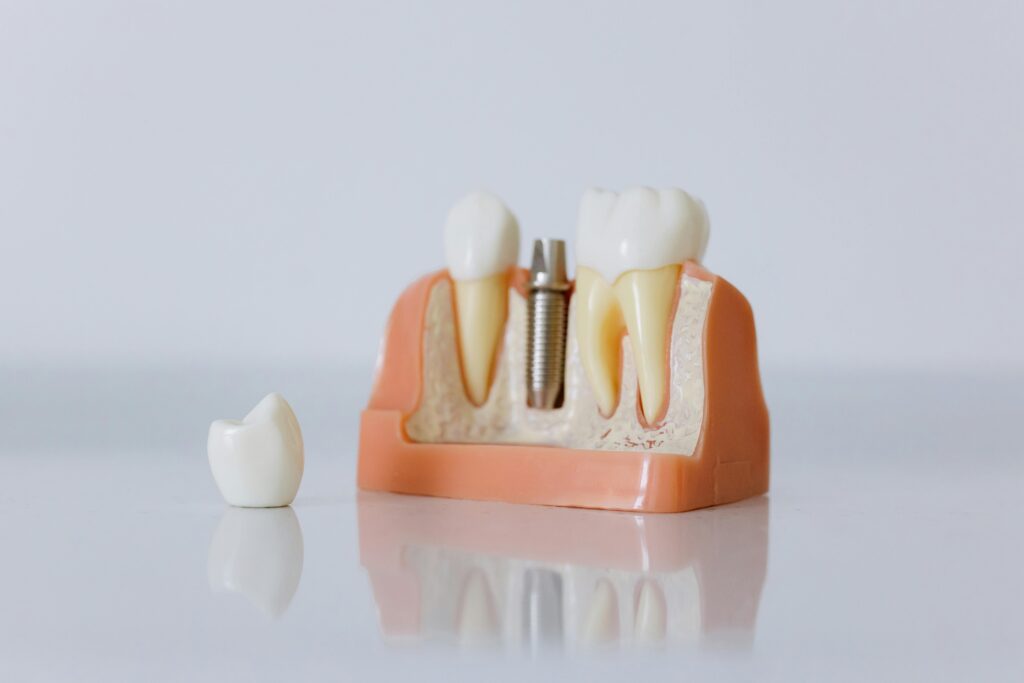
For a single missing tooth, one implant is often the cleanest and most conservative solution. A titanium implant is placed in the bone where the root used to be, and after healing, a custom crown is attached. If the gums and bone are healthy, this approach can look and feel remarkably close to a natural tooth.
There are exceptions. If the space is very narrow, the bone is too thin, or the neighboring teeth already need crowns, another treatment might make more sense. But in routine cases, placing one implant for one missing tooth preserves independence between teeth and helps maintain bone in that area.
Patients sometimes ask whether one implant can support two teeth. In a small number of carefully selected cases, especially with tiny lower incisors, a shared approach may be considered. But for most visible or high-load areas, using one implant to replace two teeth is pushing the limits. It increases stress on the implant and the restoration, and it usually compromises ideal tooth shape or emergence profile. As a rule, one implant is best for one tooth.
Several missing teeth can be handled in different ways
This is where implant planning becomes more nuanced.
Imagine a patient missing the second premolar, first molar, and second molar on one side. Three implants could replace those three teeth. But depending on bone availability and the patient’s bite, two implants might be used to support a three-unit bridge. That can be a sound and efficient treatment. On the other hand, if the patient clenches heavily or has a history of breaking dental work, placing three separate implants may provide a more durable result.
Location matters a lot. Back teeth handle stronger chewing forces than front teeth. A span that might be acceptable in one part of the mouth may not be wise in another. Bone density matters too. The front lower jaw usually has denser bone than the back upper jaw, which often has softer bone and anatomic limitations from the maxillary sinus.
A common misconception is that fewer implants always means better value. It can reduce the initial fee, yes, but only if the design remains biomechanically sound. Saving one implant today does not feel like a bargain if the bridge fractures repeatedly or overload leads to bone loss around the remaining implants.
This is one of those areas where experience shows. Good planning balances surgical simplicity, restorative predictability, maintenance access, hygiene, esthetics, and cost. The lowest implant count is not automatically the smartest choice.
Full-mouth tooth loss changes the math
When someone has lost all the teeth in the upper jaw, the lower jaw, or both, the conversation shifts from replacing individual teeth to supporting a complete prosthesis.
A removable implant denture may need as few as two implants in the lower jaw for retention. That can be life-changing for someone who struggles with a loose denture. The denture still comes out, but instead of floating around, it snaps onto implants and becomes dramatically more stable. In the upper jaw, more implants are often needed because the bone is softer and the forces are different.
For a fixed full-arch restoration, the numbers usually fall into a few common ranges:
- Two implants can sometimes stabilize a lower overdenture.
- Four implants may support a full fixed arch in carefully planned cases.
- Six implants often provide a stronger, more distributed base for a fixed arch.
- Eight or more implants may be used when anatomy, force patterns, or prosthetic goals call for additional support.
Those are broad patterns, not promises. The right number depends on bone volume, implant length and diameter, arch shape, opposing teeth, and whether the final prosthesis will be removable or fixed.
A lower arch restored with four implants can perform very well for many patients. An upper arch with only four implants can also succeed, but it demands careful case selection. The upper jaw usually presents more challenges because of sinus anatomy and lower bone density. That is one reason some surgeons and restorative dentists prefer six implants in the upper arch whenever feasible. It provides a little more forgiveness in force distribution and prosthetic design.
More implants are not always better
This point often gets lost.
People sometimes assume that if four implants are good, eight must be twice as good. It does not work that way. Every implant needs space, bone, and healthy soft tissue. Cramming in more implants than a site can comfortably support can actually create problems. Implants placed too close together are harder to clean around and may compromise blood supply to the bone between them. Restoratively, poor spacing can make it difficult to craft a hygienic, natural-looking prosthesis.
There is also the question of diminishing returns. Once a restoration has enough support to function properly, adding more implants may increase cost and complexity without a meaningful clinical benefit. In some full-arch cases, a well-designed prosthesis on six implants may perform just as well as one on eight, especially if the patient is not a heavy bruxer and the bone support is favorable.
On the other side, doing too little can also backfire. The challenge is not to maximize or minimize implant count. It is to reach the right count.
Bone volume sets the boundaries
The number of dental implants you can have is partly determined by anatomy. Some people simply do not have enough bone in the ideal places to support the number or type of implants they imagined.
After a tooth is lost, the bone in that area begins to shrink. The longer the tooth has been missing, the more the ridge may narrow or flatten. In the upper back jaw, the sinus often expands downward over time, leaving less bone height for implants. In the lower jaw, the inferior alveolar nerve limits how deep implants can be placed.
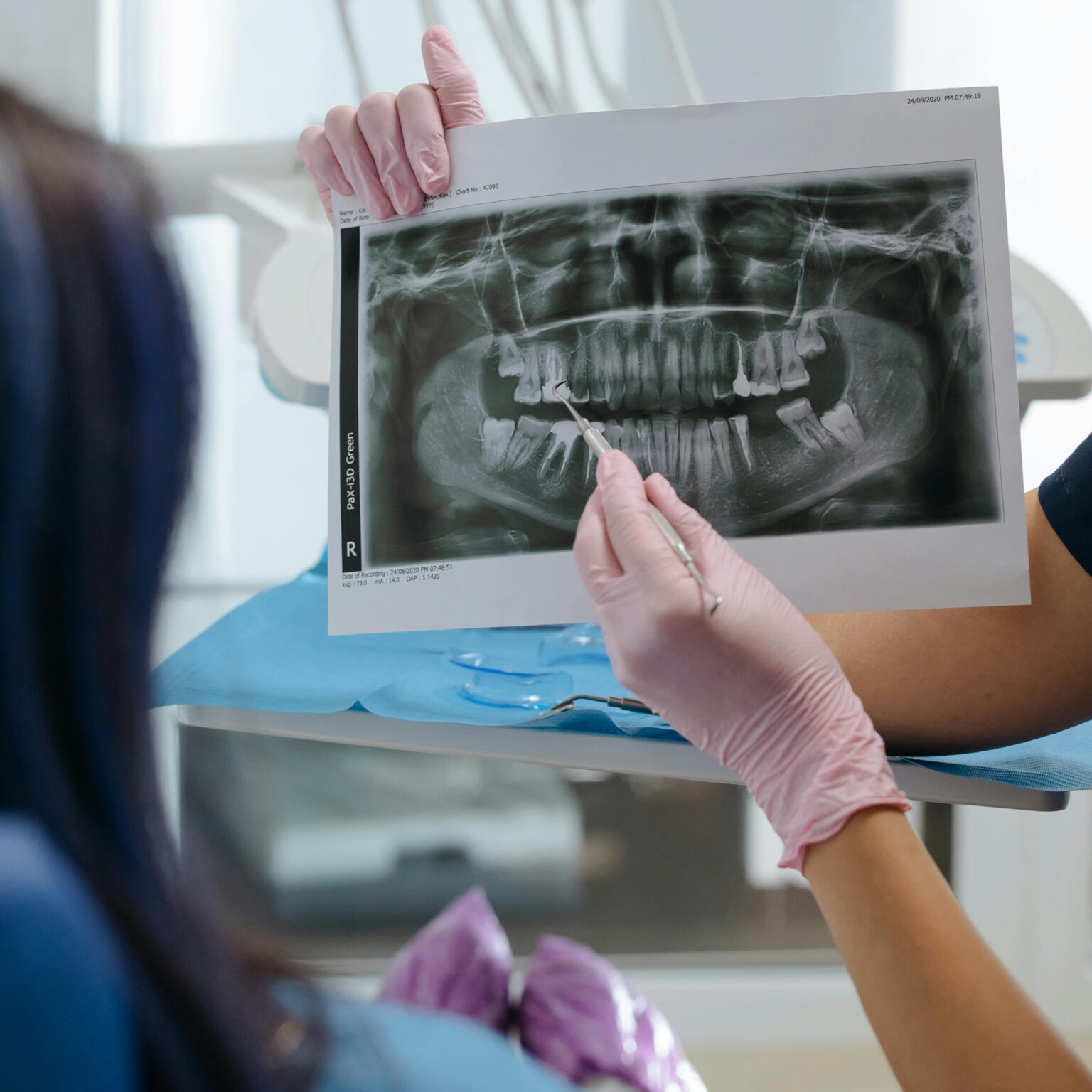
This is why scans matter. A three-dimensional CBCT scan often reveals far more than a standard X-ray. It shows bone width, height, density, angulation, and the location of nearby structures. Sometimes a patient walks in expecting three implants and learns that two are possible without grafting, but three would require additional bone augmentation. Another patient may expect a complicated grafting process and discover they are a perfect candidate for an angled full-arch solution that avoids major sinus work.
Bone grafting can expand options, but it also changes the timeline, cost, and healing process. Some patients want the most ideal reconstruction possible and are happy to graft. Others prefer a plan that works within existing anatomy, even if that means a different prosthetic design. Both approaches can be reasonable.
The bite you have matters as much as the teeth you lost
A treatment plan should never look only at the empty spaces. It has to consider the entire bite.
If you grind your teeth at night, chew with unusually high force, or have a history of breaking crowns, your implants will face greater mechanical stress. In those cases, adding support may be wise. A patient with severe bruxism and a missing molar segment may do better with three implants rather than two supporting a bridge. A full-arch patient who clenches heavily may benefit from more implants, a stronger framework, or a material choice that better tolerates load.
The opposing arch matters too. An implant-supported full arch opposing natural teeth tends to face stronger forces than one opposing a complete denture. Natural teeth can generate more power. That may influence both the number of implants and the design of the final prosthesis.
The bite also affects wear patterns, cantilevers, and stress concentration. This is one reason comprehensive planning often involves both the surgeon and the restoring dentist. Implant placement should serve the final teeth, not the other way around.
Esthetics can change the recommendation
Front teeth are not just functional units. They shape the smile, support the lips, and define how natural a restoration looks. In the esthetic zone, sometimes the ideal implant count is driven less by raw mechanics and more by soft tissue management and visual outcome.
For instance, if two upper front teeth are missing, placing one implant for each tooth often creates a more natural emergence profile than trying to cantilever or overextend a restoration. The gums between front teeth are unforgiving. Small mistakes in spacing or angulation can show immediately.
At the same time, there are cases where fewer implants actually create a better esthetic result because they preserve critical bone and papilla architecture. This is not intuitive to patients, but it is very real in practice. The implant count must respect both biology and cosmetics.
Cost influences the decision, but should not dictate it alone
It would be unrealistic to discuss dental implants without discussing cost. For many patients, the budget is a genuine limiting factor. That does not mean the cheapest plan is the best one, but it does mean the treatment needs to be practical.
There are often multiple acceptable plans at different price points. Someone missing all lower teeth might choose between a conventional denture, a two-implant overdenture, or a fixed hybrid on four or more implants. Those are not identical solutions, but they all may be legitimate options depending on the patient’s priorities.
What matters is understanding what you gain and what you give up. Fewer implants may lower the initial fee but may result in a removable prosthesis instead of a fixed one. More implants may improve stability and distribute force better, but they can increase surgical time, grafting needs, and maintenance complexity.
A thoughtful clinician explains those trade-offs plainly. If a patient understands the likely lifespan, maintenance demands, and functional differences, they can make a decision with their eyes open.
Questions worth asking before you decide
A productive implant consultation usually goes beyond “how many?” and moves into “why this number?”
Here are a few useful questions to bring to the appointment:
- If you are recommending this number of implants, what is the reason biomechanically?
- Would fewer implants still be safe, or would that compromise the result?
- Would additional implants meaningfully improve function, longevity, or esthetics?
- Do I need grafting to support this plan, and if so, what changes if I decline grafting?
- Will the final restoration be fixed or removable, and how does that affect implant count?
Those questions tend to reveal how carefully a case has been planned. They also help distinguish between a treatment that is simply possible and one that is genuinely appropriate.
Real-world examples make it easier to picture
A few common scenarios can help make this less abstract.
A patient missing a Dental Implants single lower first molar usually needs one implant. Straightforward.
A patient missing four upper front teeth after trauma may not need four implants. Depending on the space, smile line, and bone support, two or three implants could support a fixed bridge. But if the soft tissue architecture is critical and the spaces are large enough, a higher implant count may improve the esthetic result.
A patient with no lower teeth and a slipping denture might do very well with two implants retaining an overdenture. This is one of the most satisfying upgrades in dentistry because the jump in daily comfort can be dramatic. Eating, speaking, and confidence often improve quickly.
A patient who wants a fixed full upper arch after years of tooth loss may hear recommendations ranging from four to six implants. If the back bone is limited and the case suits an angled full-arch approach, four may be reasonable. If bone allows and the bite is strong, six may offer a more robust long-term platform.
These are all normal variations. They are not signs that one office is right and another is wrong. They often reflect differences in anatomy, materials, philosophy, and the details of the prosthetic plan.
The best number is the one that matches your anatomy and goals
Patients often hope there is a universal rule for dental implants, something as simple as one implant per missing tooth or four implants per arch. Dentistry is rarely that tidy.
The right number sits at the intersection of biology, engineering, and personal preference. It reflects how much bone you have, where the missing teeth are, how you bite, what kind of restoration you want, how much maintenance you can manage, and what financial boundaries you are working within.
That is why the best implant plans rarely sound generic. They sound specific. They mention the sinus, the nerve, the width of the ridge, the strength of your bite, the amount of display in your smile, and whether you want something fixed or removable. They take your mouth seriously as an individual case.
If you are being evaluated for dental implants, do not focus only on getting the lowest number or the highest number. Focus on getting a reasoned number. A good plan should make sense on paper, in the scan, and in the mirror. When those three line up, you are usually in the right range.
Oaks Dental
5000 Parkway Calabasas Suite 308
Calabasas, CA 91302, United States
+1 818-431-2000
FAQ About Dental Implants
What is the downside of a dental implant?
Implants require surgery and a healing period that can last several months. Possible complications include infection, nerve or sinus injury, damage to nearby teeth and failure to bond with bone. Your dentist should assess your health, bone support and alternatives before recommending treatment.
What do dental implants typically cost?
There is no single price for every implant case. The number of teeth replaced, implant components, final restoration and any grafting or extractions affect the total. Request a written estimate covering every stage and confirm insurance benefits and out-of-pocket costs with the practice.
How long do tooth implants last?
An implant can provide long-term support and may last a lifetime with good oral hygiene and regular dental care, but this is not guaranteed. The crown or other restoration may need replacement sooner. Smoking, gum disease and some health conditions can reduce implant success.
Ends · EDUARDOFHHW638