Invisalign Calabasas CA: Comfort, Convenience, and Confidence
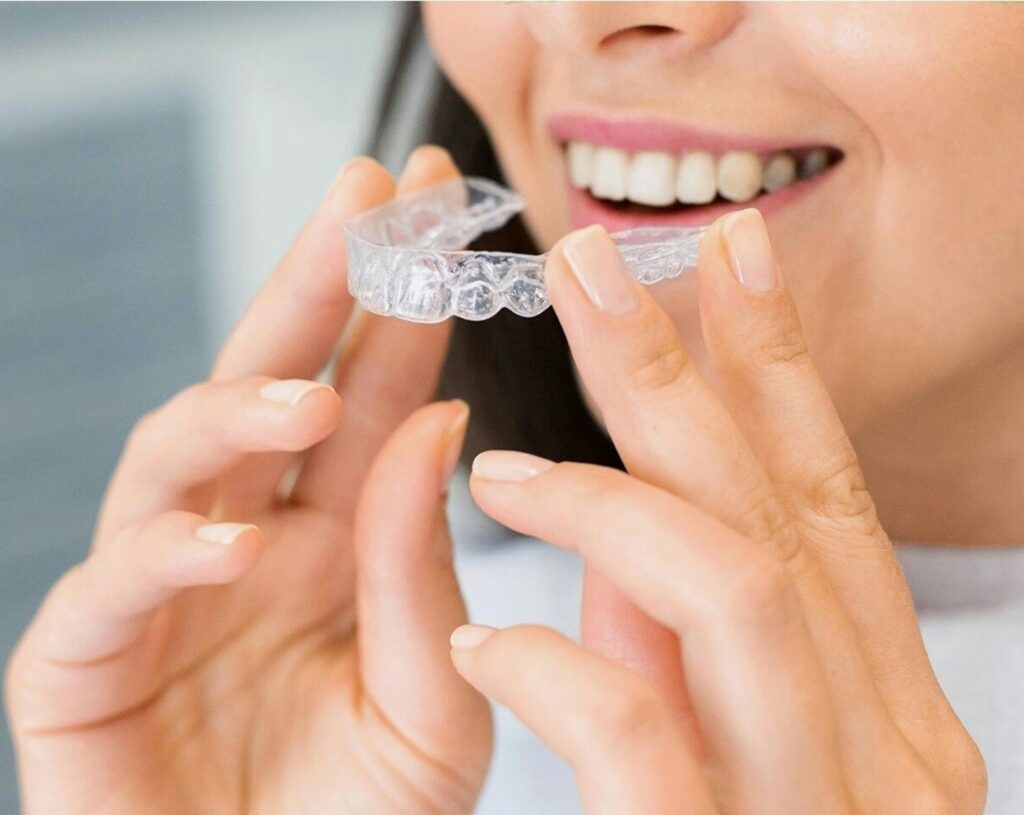
A straight smile has always carried emotional weight. People notice it in photos, in meetings, on first dates, and in everyday conversation. What has changed over the years is how people choose to get there. For many adults and teens, the appeal of clear aligners is simple: they want results without the look and feel of traditional braces. That is a big part of why interest in Invisalign Calabasas CA continues to grow among patients who care about appearance, flexibility, and comfort.
Calabasas has its own pace and personality. People here often balance packed work schedules, school calendars, social commitments, fitness routines, and plenty of face-to-face interaction. Orthodontic treatment has to fit real life, not disrupt it. Clear aligners appeal to that mindset because they are discreet, removable, and generally easier to work around than brackets and wires. Still, the best outcomes come from understanding what Invisalign can do well, where it requires discipline, and how treatment decisions should be made.
There is no single right solution for every smile. Some cases respond beautifully to aligners. Others may need a different approach or a hybrid plan. The smart move is to look beyond the marketing and focus on what daily wear is actually like, how treatment is planned, and what determines whether the final result is merely decent or truly excellent.
Why comfort matters more than people expect
When patients first ask about Invisalign, the conversation often starts with aesthetics. They like that the trays are hard to notice. After treatment begins, comfort quickly becomes just as important.
Traditional braces use brackets and wires to move teeth, and while they remain a strong option for many cases, they can create predictable friction points. Lips and cheeks may rub against hardware, especially in the first weeks after adjustments. Invisalign aligners are different. The trays are smooth and custom-made, so the irritation profile tends to be lower. That does not mean treatment is painless. Teeth still move, and movement creates pressure. Most people describe it as tightness rather than sharp pain, especially during the first day or two of a new set of aligners.
That distinction matters. Pressure is easier to live with than poking wires or broken brackets. Adults who speak for a living, whether they work in law, sales, entertainment, wellness, or client-facing business, often appreciate that difference immediately. A person can be mildly sore while still feeling polished and composed. That is not a small benefit.
There are also comfort advantages that show up in routine habits. Brushing and flossing are simpler because the aligners come out. Patients are not trying to thread floss under wires or clean around brackets after every meal. If someone has ever worn fixed braces and remembers how food seemed to disappear into impossible places, removable trays feel refreshingly manageable.
Of course, comfort has a trade-off. Invisalign depends on consistency. Braces work around the clock because they are bonded in place. Aligners only work when they are actually being worn, usually around 20 to 22 hours per day. Some patients love the freedom of removability. Others discover that too much freedom can slow progress. Comfort and convenience are real, but they are tied to personal habits.
The day-to-day convenience that drives demand
A lot of orthodontic decisions are made in the abstract. People compare brochures, photos, and financing options. The more meaningful comparison often comes later, in the texture of ordinary days.
Take meals. With braces, food choices change. Crunchy, sticky, and hard foods may be restricted because they can damage brackets or wires. With Invisalign, patients remove the trays, eat normally, brush if possible, and put the aligners back in. That sounds minor until you live it for months. Being able to enjoy a salad with nuts, a good piece of bread, or popcorn at a movie without worrying about hardware can make treatment feel less intrusive.
The same goes for important events. Weddings, presentations, family photos, auditions, interviews, and social evenings all tend to carry more confidence when treatment is discreet. Patients do need to be careful not to abuse this flexibility. Taking aligners out briefly for a key meeting or special dinner is different from leaving them out for long stretches. Used strategically, removability is a genuine lifestyle advantage. Used casually, it becomes the reason treatment drifts off course.
For busy families in Calabasas, convenience also shows up in scheduling. Invisalign appointments are often straightforward progress checks rather than extensive tightening visits. Depending on the case and the practice, visits may be spaced out enough to make school pickups, commutes, and work obligations easier to manage. Fewer emergency visits are another practical plus. There are no loose brackets to reattach or broken wires to clip. That can be especially helpful for parents managing multiple calendars at once.
Speech is another common concern. Most patients adapt quickly, though a slight lisp can happen at first. It usually fades as the tongue adjusts to the trays. People who wear aligners consistently tend to adapt faster than those who keep removing them. The mouth learns through repetition.
Confidence starts before the teeth are straight
One of the most interesting things about Invisalign is that confidence often improves well before the final aligner is finished. Part of that comes from seeing gradual changes. Teeth begin to align, spaces begin to close, and the smile looks more balanced month by month. But another part comes from the treatment experience itself.
Many adults postpone orthodontic care for years because they do not want to feel self-conscious wearing braces in professional or social settings. Clear aligners remove that barrier for a large share of patients. Instead of waiting for the “right time,” they start now. That shift alone can be empowering. It turns a long-delayed goal into active progress.
There is also a subtle psychological benefit in having a treatment plan that feels modern and personalized. Digital scans, staged tooth movement, and customized trays can make the process feel precise rather than generic. Patients are not just told to trust the process. They often get to see a preview of the intended movement and understand the sequence. That visibility helps with motivation.
Confidence, though, should not be confused with vanity. A healthier bite can improve more than appearance. Better tooth alignment may support easier cleaning, reduce plaque traps in crowded areas, and in some cases help distribute bite forces more evenly. The cosmetic payoff gets the attention, but function matters too.
What Invisalign actually treats well
Clear aligners can handle a wide range of orthodontic problems, but the phrase “wide range” should be interpreted carefully. Mild to moderate crowding and spacing often respond very well. Many bite corrections can also be addressed successfully when the case is properly planned and the patient is compliant.
Rotated teeth, narrow arches, overbites, underbites, and crossbites vary in complexity. Some respond beautifully to aligner therapy with attachments and elastics. Others are more challenging. The difference is not always obvious to a patient looking in the mirror. Two smiles can look similar from the front and require very different biomechanics to treat well.
This is where clinical judgment matters. A provider should evaluate not only the visible alignment of the front teeth, but also root positions, bone support, existing restorations, gum health, jaw relationships, airway considerations when relevant, and the stability of the proposed result. Straightening the teeth that show in selfies is not enough if the bite is left unstable or the movement exceeds what the biology can safely support.
A common misconception is that Invisalign is a product you buy, like whitening strips or an electric toothbrush. It is better understood as a treatment system that depends heavily on the quality of diagnosis and planning. The trays themselves are only part of the equation. The skill lies in deciding where each tooth should go, how to sequence that movement, when to use attachments, whether interproximal reduction is appropriate, when refinements are needed, and what retention will look like afterward.
Why provider experience changes the outcome
When people search for Invisalign Calabasas CA, they are often comparing convenience, cost, and office atmosphere. Those things matter, but provider experience matters more than most patients realize.
A polished digital simulation can make any case look easy. Real mouths are less cooperative than software. Teeth do not always track perfectly. Some move faster than expected. Some lag behind. Some need additional aligners to fine-tune the result. An experienced clinician anticipates this and builds treatment with enough flexibility to adapt.
Attachments are a good example. These small tooth-colored shapes bonded to certain teeth help the aligners grip and direct movement. Patients sometimes dislike the idea because they want the trays to be completely invisible. In practice, attachments often make the difference between a treatment that works predictably and one that struggles. A provider who is honest about that is usually doing the patient a favor.
Refinements are another area where experience shows. It is normal for many cases to need an additional round of aligners near the end. That is not automatically a sign that something went wrong. It often reflects careful finishing. The important question is whether the provider is aiming for a truly refined result or stopping when things are “good enough.” Those are not the same standard.
The strongest Invisalign cases usually come from a partnership. The clinician plans thoroughly and monitors closely. The patient wears the aligners as directed and communicates when something feels off. If either side treats the process casually, the outcome usually reflects it.
What treatment feels like week by week
The first week is often the most memorable because everything is new. Patients notice the snug fit, the slight pressure, and the practical habits they need to build. Removing the first few trays can feel awkward until the fingers learn the motion. Drinking plain water with aligners in is fine, but coffee, tea, wine, and anything sugary usually call for removal to avoid staining or trapping residue.
By the second or third tray, most people settle into a rhythm. They figure out how to manage meals away from home, when to brush, and how to store the aligners so they do not end up wrapped in a napkin and accidentally thrown away. That last scenario happens more often than you might think.
There are usually small bursts of soreness with each new tray, especially for the first 24 to 48 hours. Chewing can feel tender, particularly with foods that require pressure from the front teeth. This tends to be temporary. Patients often do best when they switch to a new aligner set at night, giving themselves several sleeping hours to adapt.
One practical detail that gets overlooked is saliva. The mouth may produce a bit more of it for the first day or two as it reacts to the trays. Then it normalizes. Lips can feel dry if patients speak frequently, so staying hydrated helps.
The biggest week-to-week challenge is rarely pain. It is consistency. The patient who pops trays out repeatedly for snacks, coffee runs, and long social evenings may lose several hours a day without noticing. Over time, Invisalign Calabasas CA that adds up. Aligners are forgiving of real life, but not infinitely forgiving.
The trade-offs people should understand before they start
Clear aligners solve many problems, but they create a few of their own. Honest treatment planning means naming those trade-offs clearly.
One is discipline. If a patient knows they are forgetful, impulsive with snacking, or unlikely to wear trays for most of the day, braces may actually be the more efficient route. It is better to admit that at the outset than to spend months half-complying and feeling frustrated.
Another is visibility. Invisalign is discreet, not invisible. In close conversation, attachments may be noticeable, and the trays can catch light. For most patients that is still far subtler than braces, but expectations should be realistic.
Cost varies by case complexity, location, and provider, and it can overlap substantially with braces. Some people assume aligners are always more expensive. Sometimes they are. Sometimes the difference is modest. Insurance may help in either direction depending on the plan. The best way to judge value is not by headline price alone, but by what is included: records, attachments, refinements, retainers, follow-up, and the quality of oversight.
Retention is the trade-off that almost nobody gets excited about, yet it may be the most important part. Teeth have memory. After active treatment, retainers are what protect the result. Skip them, and shifting can undo months or years of work. Patients who understand this from day one usually maintain their outcomes far better than those who treat retainers as optional.
Questions worth asking at a consultation
A consultation should feel like a clinical discussion, not a sales pitch. The right questions can quickly clarify how thoughtfully a case is being handled.
- What specific bite or alignment problems are being treated, beyond cosmetic straightening?
- How long is the estimated treatment, and what factors could make it shorter or longer?
- Will attachments, elastics, or interproximal reduction likely be needed?
- How are refinements handled if teeth do not track exactly as planned?
- What retainer protocol is recommended once treatment is complete?
If the answers feel vague, rushed, or overly optimistic, pay attention. Orthodontic treatment benefits from clarity. A good provider can explain the plan in plain language and also tell you where uncertainty lives. Biology is not software, and anyone who pretends otherwise is oversimplifying.
Invisalign for adults, teens, and people with previous dental work
Adults make up a large share of Invisalign patients, and for good reason. They often care deeply about keeping treatment subtle and fitting it around work and family life. Many also have dental histories that complicate planning: crowns, bridges, implants, gum recession, past orthodontic relapse, or old retainers that were gradually abandoned. These details matter because not every tooth moves the same way, and restorations need special consideration.
Teens can do very well with Invisalign too, especially when they are motivated and involved in the process. Sports and musical instruments are common reasons families prefer aligners over braces. A teen who plays contact sports may appreciate avoiding brackets, and a wind instrument player may find smooth trays easier than hardware. Still, maturity matters. A motivated teen usually excels. An indifferent one may need the built-in accountability of braces.
Patients with previous dental work should not assume clear aligners are off the table. Many can still be excellent candidates. An implant, for example, does not move like a natural tooth, so the plan must work around it. Crowns and veneers can also influence how attachments bond and how forces are distributed. This is another reason diagnosis should be individualized rather than rushed.
Living with aligners in Calabasas
Local lifestyle shapes treatment more than people think. In a place like Calabasas, where social schedules can be active and image-conscious, the discreet nature of Invisalign fits naturally. It is easy to understand the appeal for professionals on camera, parents at community events, students navigating social pressure, and anyone who prefers not to announce their orthodontic treatment to every room they walk into.
The climate plays a minor but practical role too. Warm weather often means people carry water, stay out longer, and eat on the go. That makes aligner hygiene and storage more relevant. Leaving trays in a hot car is a bad idea. Wrapping them in a tissue at lunch is risky. A proper case becomes one of those small, unglamorous essentials that saves trouble later.
Many patients here are also focused on wellness, and that mindset can actually help compliance. Invisalign works best when patients are intentional. They notice wear time, keep up with cleaning, and think ahead before meals and events. People who already manage routines around fitness, nutrition, or skin care often adapt quickly because aligner wear becomes just another daily discipline.
The finishing phase, where good results become great ones
Early progress gets attention because it is visible. Finishing is where expertise shows. Small spaces, tiny rotations, bite contacts, and edge alignment can seem insignificant on a screen and feel very significant in the mouth.
This phase often requires patience. A patient may feel “basically done” while the provider sees two or three details that matter for function or stability. Those details are Invisalign Calabasas CA worth addressing. The front teeth may look straight, but if the bite is not settling properly or certain contacts are off, the result may not hold as well or feel as comfortable.
Refinements can be a gift rather than a setback. They allow the provider to chase precision instead of settling for acceptable. Patients who understand that tend to be happier in the long run. They do not see an extra set of trays as bad news. They see it as part of getting the finish right.
Retainers come next, and this is where confidence gets preserved. A beautifully aligned smile can drift if retention is inconsistent. In the beginning, retainers are usually worn more often, then transitioned toward nighttime wear depending on the plan. That schedule varies, but the principle does not: retention is not a footnote. It is part of treatment.
Choosing the right path with clear eyes
The attraction of Invisalign is easy to understand. It offers a cleaner, more flexible orthodontic experience for many patients, and when the case is selected well, the planning is strong, and wear is consistent, the results can be excellent. Comfort improves compliance. Convenience reduces friction. Confidence often rises from the very start.
That said, the best decision is not always the easiest one to market. Some patients are ideal aligner candidates. Some are better served by braces. Some need a conversation that is less about what looks appealing and more about what will deliver the healthiest, most stable outcome. Good care starts there.
For anyone exploring Invisalign Calabasas CA, the smartest approach is to think beyond the trays themselves. Ask how your bite will function at the end, what the daily commitment looks like, how refinements are handled, and what retention will require. A straight smile is not just the product of technology. It is the result of planning, biology, and follow-through. When those pieces line up, comfort, convenience, and confidence are not slogans. They become the lived experience of treatment done well.
Oaks Dental
5000 Parkway Calabasas, Suite 308
Calabasas, CA 91302
(818) 643-6521
FAQ About Invisalign Calabasas CA
How many hours a day should I wear Invisalign?
Clear aligners are typically worn for 20 to 22 hours a day. Follow your dentist’s instructions for your specific treatment plan.
What age is best for Invisalign?
Many teens and adults can use clear aligners. A dentist can assess dental development, oral health, and the type of tooth movement needed.
What affects the cost of Invisalign in California?
Cost depends on the complexity and length of treatment and what the quoted plan includes. Ask for an itemized estimate and check any orthodontic coverage with your insurer.
Ends · EDUARDOFHHW638