Invisalign Calabasas CA for Better Smile Symmetry
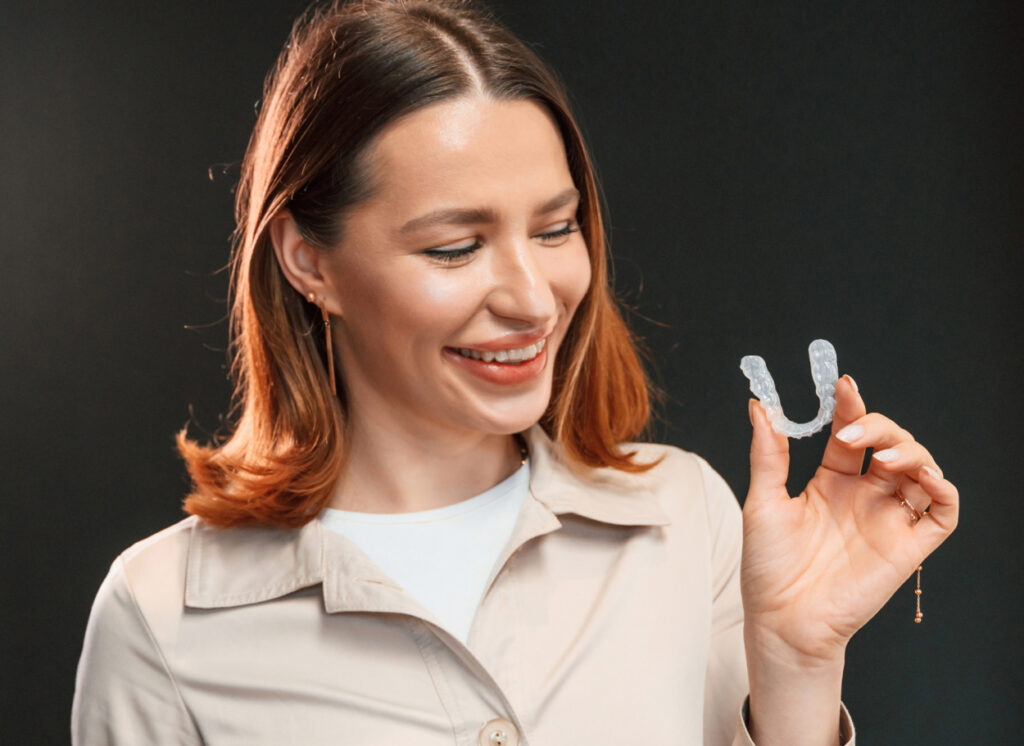
Smile symmetry is one of those details people notice without always knowing why. A smile can look bright and healthy, yet still feel slightly off because one lateral incisor sits higher than the other, the midline drifts to one side, or the upper and lower arches do not line up cleanly. Patients rarely walk in asking for millimeter-based corrections. They usually say something simpler: “One side of my smile shows more than the other,” or “My teeth look uneven in photos.”
That is where Invisalign can be especially useful. In the right case, clear aligners offer precise, staged tooth movement that improves balance across the smile without the appearance of brackets and wires. For adults and teens in Calabasas who want orthodontic treatment to fit neatly into work, school, and social life, that matters. Appearance is part of it, but so is flexibility. Most patients want a better smile without feeling like their treatment takes over every conversation or every meal.
When people search for Invisalign Calabasas CA, they are often looking for more than a brand name. They are looking for a practical answer to a very specific problem: how to straighten teeth and improve smile symmetry in a way that feels manageable, discreet, and worth the investment.
What smile symmetry actually means
Perfect symmetry is not the goal, and in real faces it is not even natural. Human faces have small differences from side to side. The same is true of smiles. A more realistic goal is harmony. That means the teeth, gumline, bite, and facial midline work together well enough that the smile looks balanced and intentional.
Several factors shape that balance. Tooth position is the obvious one. A rotated canine or a crowded front tooth catches light differently and can make one side of the smile look heavier. The vertical position of the teeth matters too. If one front tooth sits slightly lower, it may draw the eye every time a person speaks. The arch form also plays a role. A narrow arch can create dark spaces at the corners of the smile, while a broader, more even arch tends to look fuller and more symmetrical.
Then there is the bite. If the upper and lower teeth do not meet properly, the jaw may shift to find a comfortable closing position. That shift can make the smile look off center, even if the teeth themselves are relatively straight. In some patients, what appears to be a cosmetic issue is partly functional. Correcting the bite often improves the symmetry more than patients expect.
Why patients in Calabasas often ask about clear aligners first
Calabasas patients tend to be busy, appearance-conscious, and practical about treatment. Many are managing careers, family schedules, public-facing work, or frequent social commitments. They want results, but they do not necessarily want traditional braces to be part of their daily image for the next year or two.
Clear aligners fit that lifestyle well. They are removable for meals, easier to clean around than fixed braces, and far less noticeable in person and in photographs. For someone who attends meetings, records content, gives presentations, or simply prefers a low-profile treatment option, Invisalign is often the first thing they ask about.
There is another reason aligners appeal to adults in particular. Many already had some orthodontic treatment when they were younger, then saw their teeth shift over time because retainers were lost, wisdom teeth complicated crowding, or natural age-related movement changed the bite. These patients are not starting from zero. They usually want refinement, not reinvention. Smile symmetry concerns often fall into that category, and Invisalign can be an efficient way to address them.
How Invisalign improves symmetry
Invisalign works by using a series of custom aligners that apply controlled pressure to move teeth in small increments. That sounds simple, but the real strength of the system lies in planning. A well-designed treatment sequence can address multiple asymmetries at once, such as rotation, spacing, midline discrepancy, and uneven tooth heights.
If one central incisor is slightly tucked behind the other, for example, the aligners can bring it forward and level the incisal edges so the front teeth look more even. If the upper dental midline is shifted a few millimeters to the left, the treatment can redistribute space and guide the teeth toward a more centered position. If one side of the arch is constricted, the aligners may expand that side in a controlled way to create a broader, more balanced smile line.
Attachments often make these movements possible. These are small, tooth-colored shapes bonded to certain teeth to give the aligners more grip. Patients sometimes worry when they hear the word “attachment,” but in practice they are discreet and strategically placed. For complex movements, they can make a major difference. A case that looks easy in a simulation can fail in real life without the right attachment design and patient compliance.
One of the most common misconceptions is that Invisalign only handles mild straightening. That used to be closer to the truth years ago. Today, clear aligners can treat a wider range of issues than many people realize, especially when the case is carefully selected and monitored. Still, not every asymmetry is an ideal aligner case, and that distinction matters.
Cases where Invisalign tends to work very well
Smile symmetry problems come in different forms. Invisalign often performs well when the concern is primarily dental rather than skeletal. Mild to moderate crowding, spacing, rotations, narrow arches, slight midline shifts, and minor bite discrepancies can respond beautifully.
A common example is the adult patient whose lower front teeth have crowded over time while the upper teeth still look mostly straight. In photos, the asymmetry may show up as a slight shift in the smile line and an uneven lower arch during speech. Another example is the patient with one lateral incisor that appears tucked inward, making the smile look unbalanced from straight on. In both cases, aligners can usually produce visible improvements without disrupting daily life much.
Relapse cases are especially common. Someone wore braces at 14, stopped wearing retainers at 19, and now at 34 notices that one side of the smile has collapsed inward or the front teeth overlap again. These patients often do very well with Invisalign because the required movements are familiar and limited, even if they still need careful planning.
When symmetry concerns go beyond tooth alignment
There are limits, and honest treatment planning depends on acknowledging them early. Not every asymmetrical smile is caused by tooth position alone. Some involve jaw structure, gum display, facial muscle patterns, or differences in tooth shape and size. If the lower jaw sits slightly off center because of skeletal asymmetry, aligners may improve the dental appearance without fully correcting the facial imbalance. If one tooth is naturally smaller, moving it into a “perfect” position may still leave the smile looking uneven unless bonding or veneers are part of the plan.
This is where experience matters. An orthodontic or cosmetic plan should not promise symmetry in a broad, vague way. It should identify the actual source of imbalance. Sometimes the best answer is Invisalign alone. Sometimes it is Invisalign followed by edge bonding to refine tooth proportions. Sometimes gum contouring is the missing piece. Occasionally, a patient who came in asking for aligners learns that traditional braces, or a multidisciplinary approach, would be more predictable.
Patients appreciate that kind of candor. Most people do not need perfection. They want to know what can improve, what probably will not, and what trade-offs come with each option.
The consultation matters more than the marketing
A polished Invisalign provider page can make almost any case look straightforward. The real question is whether the consultation gets specific. For smile symmetry, general statements are not enough. The clinician should evaluate the dental midline relative to the face, the gumline, tooth display at rest and during smiling, arch width, bite relationship, and any functional shift in the jaw.
Photos are useful because asymmetry often becomes easier to see when the patient is relaxed, smiling naturally, and smiling broadly. Digital scans help show crowding, rotations, and bite contact patterns. A good consultation also includes a discussion of habits and expectations. Someone who clenches heavily, forgets removable appliances, or hopes to wear aligners only at night may not be an ideal candidate, at least not without adjusted expectations.
One pattern I have seen repeatedly is that patients focus on one tooth when the real issue is the frame around it. They point to a lateral incisor that looks “crooked,” but the bigger contributors are a narrow arch and a midline that drifts. Once those are corrected, the single tooth stops drawing attention. That is the kind of judgment a simulation alone cannot replace.
Why compliance makes or breaks the result
Invisalign gives patients freedom, but freedom comes with responsibility. Aligners generally need to be worn about 20 to 22 hours per day for treatment to stay on track. Taking them out for coffee, lunch, a long dinner, and then forgetting to put them back in until bedtime is one of the fastest ways to slow progress.
For symmetry correction, consistency matters even more. Small movements build on one another. If one side of the arch is not tracking properly because the aligner is not being worn enough, the imbalance can become more noticeable rather than less. Patients sometimes assume they can “catch up” by wearing trays extra hours near the end of the week. In reality, teeth respond biologically, not by negotiation.
The patients who do best usually develop routines early. They eat, brush, and get the aligners back in without much drama. They keep a case with them. They do not wrap trays in napkins at restaurants. They understand that each aligner is part of a sequence, not a standalone gadget.
What treatment time usually looks like
Treatment length depends on complexity, but many smile symmetry cases fall somewhere between 6 and 18 months. Minor relapse or single-arch refinement may finish closer to the short end. Cases involving bite correction, arch development, or significant crowding can take longer. Refinement trays are common, and patients should expect that possibility from the start.
That is not a sign something went wrong. Teeth do not always move exactly as simulated. Biology varies. Attachments can debond. A stubborn rotation can lag behind. Refinements allow the clinician to respond to what actually happened, not just what was planned on day one.
For someone comparing options, it helps to think in terms of phases rather than a single fixed timeline. The initial active phase gets the bulk of the correction done. The refinement phase polishes details, often including the exact kind of small symmetry adjustments that make the smile look truly finished.
The aesthetic details patients notice most
People rarely obsess over molar relationships. They notice what shows in the mirror and in photos. That usually means the front six to eight teeth, the gumline around them, and the way the smile sits in the face.
A few details tend to matter most:
- The upper midline and whether it appears centered with the face
- The level of the front edges of the teeth
- The fullness of the smile from side to side
- Visible crowding or rotation in the front teeth
- Balance between tooth display and gum display
These are also the areas where careful Invisalign planning can pay off. A centered midline is not always achievable in the strictest sense, especially if the jaws themselves are asymmetric, but even modest improvement can change how the whole smile reads. Leveling the edges of the front teeth can make a smile appear calmer and more polished. Broadening the arch slightly can reduce dark corridors and make the smile feel more even across the face.
Invisalign versus braces for symmetry correction
Traditional braces remain an excellent tool, and in some cases they are still the better tool. Severe rotations, major vertical discrepancies, significant bite problems, and certain complex tooth movements can be more efficient with braces. Fixed appliances also remove the compliance variable. The braces are on all the time, whether the patient is motivated that day or not.
That said, Invisalign has distinct advantages for the right symmetry case. Digital planning allows clinicians to visualize tooth position changes in a very intuitive way. Patients tend to stay more engaged because they can see the progression. Oral hygiene is easier, which matters during months of treatment. For adults especially, the lower visibility of aligners often means they start treatment sooner instead of putting it off for another few years.
The better question is not which system is superior in the abstract. It is which system gives the most predictable path to the specific correction a patient wants.
Life during treatment in Calabasas
Lifestyle fit is not a minor point. A treatment plan that looks excellent on paper can fall apart if it does not work in daily life. In Calabasas, where schedules often include commuting, long workdays, fitness routines, social events, and a steady stream of coffee stops, Invisalign is attractive because it bends around the day rather than controlling it.
There are still adjustments. Snacking becomes less casual because every snack means removing trays and cleaning before reinserting them. Coffee drinkers often learn to drink faster, use a straw for iced beverages, or reserve certain drinks for aligner-free windows. Musicians who play wind instruments sometimes need a short adaptation period. Public speakers usually adjust quickly, though a slight lisp can appear for a few days with new trays.
Patients who know this ahead of time adapt much more smoothly. The first two weeks are often the learning curve. After that, most people settle into a rhythm and stop thinking about the aligners constantly.
Cost, value, and what patients are really paying for
Fees vary Oaks Dental Invisalign Calabasas CA widely depending on case complexity, provider experience, and whether refinements and retainers are included. It is sensible to ask for clarity on all of that. The lowest quote is not always the best value, especially if the treatment plan is simplistic or the follow-up is thin.
What patients are really paying for is not the plastic itself. They are paying for diagnosis, planning, monitoring, adjustments, refinements, and judgment. Smile symmetry is one of those outcomes that depends heavily on judgment. Small decisions about where to create space, how much to expand, when to use elastics, whether to overcorrect a rotation, or when to stop and refine can have a visible effect on the final look.
A well-run Invisalign case often feels easy to the patient. That ease usually reflects a lot of invisible planning behind the scenes.
Retainers are not optional if you want the symmetry to last
This is the part many adults know already because they lived through the alternative. Teeth move. They move after braces, after Invisalign, after years of stability, and sometimes after dental work changes the bite. If a patient has invested time and money to improve smile symmetry, retention is the insurance policy that protects that result.
Most patients wear retainers full-time for a short period after active treatment, then transition to nighttime wear. The exact schedule varies by case, but the principle does not. Without retention, relapse is not a remote possibility. It is common.
A patient once described retainers to me in the most practical way I have heard: treatment got her where she wanted to go, but the retainers kept her from paying for the same trip twice. That is blunt, but accurate.
Choosing the right provider for Invisalign Calabasas CA
The phrase Invisalign Calabasas CA will pull up many options, but provider selection should go deeper than location and branding. Smile symmetry cases benefit from someone who looks beyond straight teeth and considers the full smile. Before starting, patients should feel comfortable asking how the provider evaluates asymmetry, what kinds of cases are best suited for aligners, and whether additional cosmetic refinement might be recommended after orthodontic movement.
A few signs of a thoughtful approach stand out:
- The consultation includes a discussion of facial balance, not just crowding
- Limitations are explained clearly, without overpromising
- Refinement is presented as a normal part of treatment when appropriate
- Retention is discussed early, not as an afterthought
- The plan feels tailored rather than copied from a generic template
That last point matters more than people think. Two patients can both be told they need Invisalign, yet one needs minor front-tooth alignment while the other needs a broader strategy involving bite correction and restorative finishing. The trays may look similar. The planning is not.
A better smile, but also a more confident one
The most satisfying Invisalign cases are not always the dramatic ones. Often they are the subtle refinements that make a person stop hiding one side of their smile in photos, stop angling their face during video calls, or stop noticing the same small irregularity every morning in the mirror.
Better smile symmetry does not mean a smile becomes artificial. If the treatment is done well, people usually notice that the smile looks healthier, calmer, and more balanced, without being able to pinpoint every technical reason. That is often the sweet spot. The result looks like the patient, just more aligned with how they want to present themselves.
For the right candidate, Invisalign offers a practical path to that result. It can correct uneven spacing, rotations, crowding, mild midline issues, and bite-related imbalances in a way that fits modern adult life remarkably well. For residents exploring Invisalign Calabasas CA, the key is not simply finding access to clear aligners. It is finding a careful diagnosis, a realistic plan, and a provider who understands that symmetry is not about chasing perfection. It is about creating balance that looks natural, feels comfortable, and lasts.
Oaks Dental
5000 Parkway Calabasas, Suite 308
Calabasas, CA 91302
(818) 643-6521
FAQ About Invisalign Calabasas CA
How many hours a day should I wear Invisalign?
Clear aligners are typically worn for 20 to 22 hours a day. Follow your dentist’s instructions for your specific treatment plan.
What age is best for Invisalign?
Many teens and adults can use clear aligners. A dentist can assess dental development, oral health, and the type of tooth movement needed.
What affects the cost of Invisalign in California?
Cost depends on the complexity and length of treatment and what the quoted plan includes. Ask for an itemized estimate and check any orthodontic coverage with your insurer.
Ends · EDUARDOFHHW638